
Wheel Alignment Durban: Warning Signs and When to Book
wheel alignment Durban: Wheel alignment in Durban should be checked when a car pulls to one side, the steering wheel sits off-centre, tyres wear unevenly or handling changes after a pothole impact. Alignment adjusts the angles at which the wheels meet the road; it does not simply straighten the steering wheel.
For drivers considering wheel alignment Durban services, potholes, kerbs, speed humps and uneven road repairs are common triggers. These impacts can alter alignment or expose worn suspension parts that make accurate alignment impossible until repaired.
DNA Auto Centre supports all makes and models with professional vehicle servicing and diagnostic testing. This guide explains the warning signs, what a technician checks and when the vehicle needs urgent attention.
wheel alignment Durban: the most important warning signs
Look for a pattern and share it with the technician.
- Vehicle pulls on a level road: A consistent drift can indicate alignment, tyre-pressure, tyre-construction or brake problems.
- Steering wheel is off-centre: The car may travel straight while the steering wheel sits noticeably left or right.
- Uneven tyre wear: Feathering, inner-edge or outer-edge wear can point to incorrect toe, camber or worn components.
- Nervous or unstable steering: Poor geometry can make the vehicle wander and require frequent corrections.
- Change after a pothole impact: A hard impact can shift adjustment, bend a component or damage a tyre even without obvious marks.
Common causes technicians investigate
Wheel alignment Durban problems can follow pothole impacts, worn suspension, ride-height changes, tyre differences or previous accident damage. The correct repair depends on evidence from the vehicle.
- Potholes and kerbs: Sudden impacts place high loads on wheels, joints and alignment settings.
- Worn suspension parts: Loose ball joints, bushes or tie-rod ends prevent the wheels from holding the intended angle.
- Ride-height changes: Sagging springs, replaced components or modifications alter suspension geometry.
- Tyre or pressure differences: Mismatched tyres and incorrect pressure can mimic an alignment pull.
- Previous accident damage: A bent control arm, subframe or mounting point may require repair before alignment.
How the problem is diagnosed
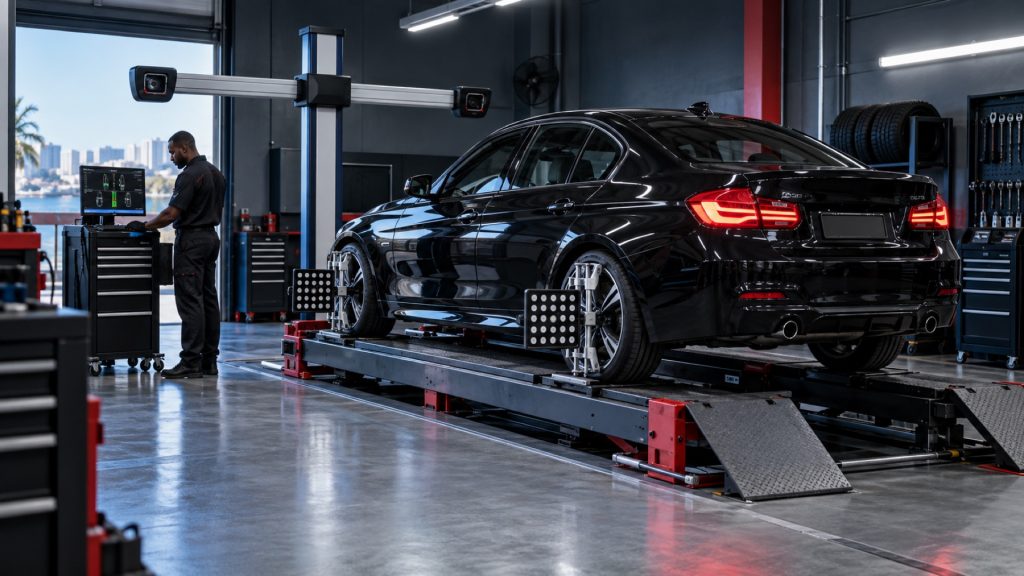
A professional wheel alignment Durban check begins with tyre pressure, tyre condition and suspension play. Alignment equipment then measures toe, camber and caster against suitable specifications. The technician should explain readings that cannot be adjusted and identify worn or bent parts rather than forcing settings into range.
Good diagnosis combines the driver’s description, a visual inspection, road testing when safe and measurements. This protects you from paying for unnecessary parts.
Related information is available in our suspension repairs and warning signs, car service in Durban and vehicle repair quote.
What to note before your workshop visit
Before a wheel alignment Durban appointment, note whether the vehicle pulls constantly or only under braking, and whether the steering changed after a pothole, kerb impact, tyre replacement or suspension repair. Tell the technician about vibration, noises and uneven tyre wear.
Bring recent tyre or suspension invoices where possible. Accurate history helps separate geometry faults from tyre pressure, brake drag and worn components.
Can you continue driving?
Alignment usually changes gradually, but a sudden steering change after impact deserves prompt inspection. Stop driving if the tyre is damaged, the steering feels loose, the wheel vibrates severely or the car cannot hold a predictable line.
If you are unsure, move out of traffic safely and call the workshop or roadside assistance. Do not continue simply because the vehicle can still move.
How to reduce repeat alignment problems
To protect wheel alignment Durban motorists should maintain tyre pressures, rotate tyres where appropriate and slow down before road damage. Have alignment checked after a major impact, suspension repair or new tyre fitment, and whenever wear patterns suggest a geometry problem.
Durban’s heat, humidity, stop-start traffic and damaged road surfaces can expose weak components sooner. Pair regular inspections with monthly tyre-pressure and tread checks.
Why a professional inspection matters
Several faults can mimic poor wheel alignment Durban drivers describe. Tyre construction, pressure differences, brake drag and suspension play may create similar pulling. A professional workshop can compare physical condition with alignment measurements and explain which work is urgent.
For broader road-safety guidance, see the South African Government roadworthiness guidance. Read about international service standards at Bosch Car Service.
Why correct geometry protects tyres and fuel use
Incorrect toe or camber makes a tyre scrub across the road instead of rolling cleanly. The result can be rapid edge wear, extra steering effort and increased rolling resistance. Correct geometry cannot restore tread already worn away, but it can protect replacement tyres and make the vehicle easier to control.
Alignment readings should be recorded before and after adjustment. If a value remains outside specification, the workshop should explain whether the vehicle has a non-adjustable angle, a bent component or suspension wear that must be repaired first. This evidence is more useful than simply being told the steering wheel was straightened.
When to recheck alignment
A wheel alignment Durban check is sensible after a hard pothole strike, kerb impact, suspension repair or new tyre fitment. It is also worth checking when the steering wheel no longer sits centrally or one tyre begins wearing faster than the others. Drivers who cover high mileage on uneven roads may need inspections more often than vehicles used gently on smooth routes.
Ask for the before-and-after readings and keep them with the vehicle records. If wheel alignment Durban settings move out again quickly, the workshop should look for loose joints, damaged wheels, weak springs or bent suspension parts instead of repeatedly adjusting the same angles.
Frequently asked questions
Is wheel alignment the same as wheel balancing?
No. Alignment sets wheel angles; balancing corrects uneven rotating mass in the wheel and tyre.
Can alignment cause steering vibration?
It can contribute to poor handling, but vibration more commonly points to balance, tyre, wheel, bearing or suspension issues.
Should alignment be done after replacing suspension parts?
Yes, when the replaced component affects geometry or the manufacturer procedure requires it.
How often should alignment be checked?
There is no single interval. Check it when symptoms appear, after impacts or during tyre replacement.
Will alignment fix uneven tyres?
It prevents further geometry-related wear, but it cannot restore tread already worn away.
Book wheel alignment in Durban
If your car is pulling, the steering wheel is off-centre or tyres are wearing unevenly, book a wheel alignment Durban inspection before the problem becomes more expensive or unsafe. DNA Auto Centre in Briardene serves all makes and models.
Call 031 569 1417 or WhatsApp 084 253 3043 to request an assessment.