

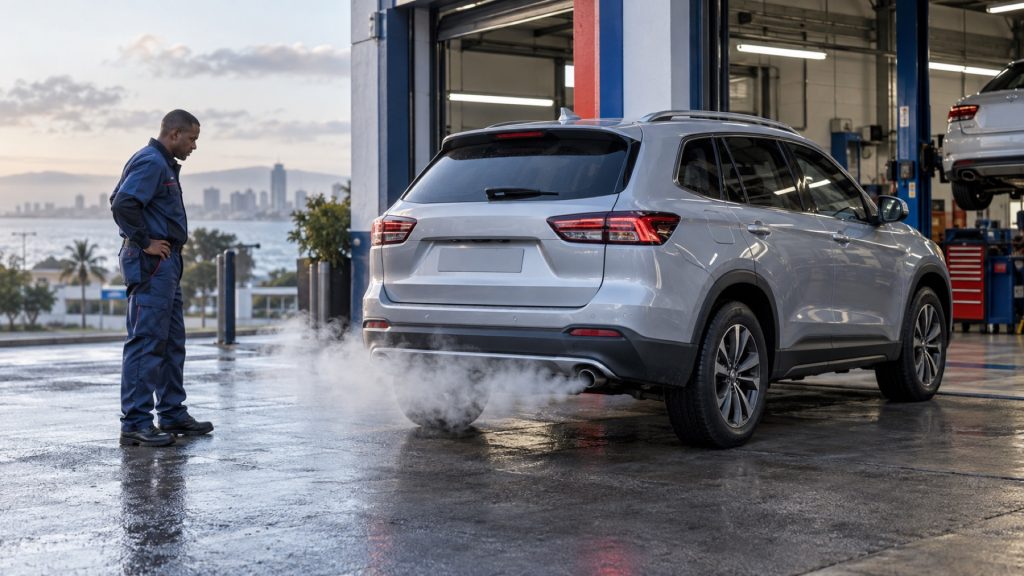
White Smoke From Your Exhaust: Causes and When to Stop Driving
White smoke from exhaust is sometimes harmless condensation, especially for a few minutes after a cold start. Thick smoke that continues after the engine warms up is different. It can indicate coolant entering the combustion chamber, an injection problem or internal engine damage and should be inspected before the vehicle is driven far.
When white smoke from exhaust appears, drivers in Durban and Durban North should act carefully. the safest response is to note exactly when the symptom appears and arrange a proper inspection before a minor fault becomes a breakdown. Durban mornings can be humid, so a light vapour that disappears quickly is common. The important clues are how long the smoke lasts, whether it has a sweet smell, whether the coolant level is dropping and whether the temperature gauge is rising.
DNA Auto Centre supports all makes and models with professional vehicle servicing and diagnostic testing. This guide explains what the symptom can mean, what a technician checks and when you should stop driving.
white smoke from exhaust: the most important warning signs
No single symptom identifies a failed part with certainty. Look for a pattern and share it with the technician. These are the most useful clues:
- Smoke continues when the engine is warm: Condensation normally clears as the exhaust heats. A dense plume that remains after a normal warm-up needs investigation.
- Coolant level keeps falling: A falling reservoir level without an obvious external leak may mean coolant is entering a cylinder or escaping under pressure.
- Sweet smell from the exhaust: Engine coolant has a distinctive sweet smell. Combined with persistent white smoke, it is an important warning sign.
- Engine runs roughly or misfires: Coolant or excess fuel inside a cylinder can interrupt combustion, causing shaking, misfires and difficult starting.
- Temperature gauge climbs: Overheating together with exhaust smoke can turn a repairable cooling fault into severe cylinder-head or engine damage.
Common causes technicians investigate
White smoke from exhaust can have several causes. The correct repair depends on evidence from the vehicle. These are common possibilities, not a substitute for inspection:
- Normal condensation: Water vapour collects inside a cold exhaust and disappears once the system reaches operating temperature.
- Head-gasket failure: A damaged gasket can allow coolant to cross from a cooling passage into a combustion chamber.
- Cracked cylinder head or block: Overheating can distort or crack metal components, creating a path for coolant into the engine.
- Fuel-injection problem: Poor atomisation or incorrect timing on some engines may create pale smoke and rough running.
- Cooling-system leak: A pressure loss, damaged hose, radiator fault or water-pump problem may cause overheating before internal symptoms appear.
How the problem is diagnosed
Diagnosing white smoke from exhaust starts with the driver’s observations and a cold-start inspection. A technician checks fluid levels, stored fault codes, cooling-system pressure and signs of contamination in the oil or coolant. Depending on the findings, compression, leak-down or combustion-gas testing may be required. The aim is to identify the failed part before recommending a repair, rather than replacing components from guesswork.
A scan tool is valuable, but a fault code does not automatically name the failed part. Good diagnosis combines the driver’s description, a visual inspection, road testing when safe, measurements and manufacturer information. That process protects you from paying for unnecessary parts.
Related information is available in our engine diagnostic test in Durban, car overheating advice and engine overhaul specialists. These pages explain the next step without forcing several different search intents into one article.
What to note before your workshop visit
Useful details can shorten diagnostic time. Write down whether the problem happens with a cold or warm engine, at a particular speed, while turning, braking or accelerating, and whether a dashboard warning appeared. Note any recent service, tyre replacement, pothole impact, overheating incident or repair that happened before the symptom started. If the vehicle makes an intermittent sound, a short recording may help the technician understand what you heard, although it cannot replace a physical inspection.
Do not clean away a fresh leak, clear warning codes or disconnect the battery immediately before the appointment unless safety requires it. Those clues may help locate the original fault. Bring the service history and describe changes in fuel use, fluid levels, starting behaviour and performance as accurately as possible.
Can you continue driving?
Driving with white smoke from exhaust can be risky. Stop in a safe place if the temperature gauge rises, a red warning light appears, the engine loses power or the smoke becomes heavy. Switch the engine off and arrange assistance. Continuing to drive an overheating engine can damage the cylinder head, catalytic converter and internal components. Never remove a hot coolant cap.
If you are unsure, choose the cautious option. Move out of traffic if it is safe, switch the vehicle off and call the workshop or roadside assistance. Do not continue simply because the vehicle can still move; some faults cause damage very quickly once a warning becomes obvious.
How to reduce the chance of repeat problems
To reduce the chance of white smoke from exhaust returning, check coolant and oil levels regularly when the engine is cold, respond quickly to temperature changes and repair small leaks before they worsen. Correct coolant, clean oil and manufacturer-specified service intervals all help protect gaskets, seals and cooling components.
Durban’s heat, humidity, stop-start traffic and damaged road surfaces can expose weak components sooner. Regular inspections are most useful when they are paired with your own monthly checks: tyre pressure and condition, fluid levels, warning lights, new noises and any fresh marks beneath the vehicle.
Why a professional inspection matters
Several vehicle faults produce almost identical symptoms. Replacing the most obvious part without testing can waste money and delay the correct repair. A professional workshop can compare physical condition with diagnostic data and explain which work is urgent, which is routine and which can be monitored.
For broader road-safety guidance, see the South African Government roadworthiness guidance. You can also read about the international service standards and repair categories described by Bosch Car Service.
Frequently asked questions
Can low coolant cause white smoke?
Low coolant alone does not create exhaust smoke, but the leak causing the low level may allow coolant into the engine.
Is white smoke normal on a cold morning?
A thin vapour that clears within a few minutes is usually condensation. Persistent dense smoke is not normal.
Can I drive with white exhaust smoke?
Only a short distance if the smoke is light, the engine is cool and all levels are stable. Stop immediately if it overheats or runs badly.
Does white smoke always mean a blown head gasket?
No. Condensation, injection faults and other cooling problems can look similar, so testing is essential.
How is the problem confirmed?
Technicians combine a visual inspection, diagnostic scan and cooling or compression tests based on the symptoms.
Book an inspection at DNA Auto Centre
If you are experiencing white smoke from exhaust, book an inspection before the problem becomes more expensive or unsafe. DNA Auto Centre in Briardene serves Durban motorists with professional diagnostics, servicing and mechanical repairs for all makes and models.
Call 031 569 1417 or WhatsApp 084 253 3043 to request an assessment.