
Brake Safety Checks Durban: 3 Signs Your Brakes Need Attention
Brake safety checks Durban drivers can trust start with paying attention to small warning signs before they become serious problems. Your brakes are one of the most important safety systems on your vehicle. If they are noisy, vibrating, slow to respond or simply not feeling right, it is not something to leave for the next service months from now.
In Durban traffic, brakes work hard. Stop-start driving, steep roads, wet coastal conditions and daily commuting can all place extra pressure on brake pads, discs, fluid and related components. At DNA Auto Centre, our team checks the full braking system so you can make an informed decision before safety is compromised.
Brake safety checks Durban: why it matters every day
A vehicle does not need to be travelling fast for weak brakes to become dangerous. A few extra metres of stopping distance can make the difference between stopping safely and hitting another vehicle, a pedestrian, a wall or an obstacle in the road. That is why brake inspections should not only happen after a dashboard warning light appears.
Braking performance depends on several parts working together: brake pads, brake discs or rotors, calipers, brake fluid, hoses, ABS components and tyres. If one part is worn or contaminated, the entire system can feel weaker. A proper brake inspection looks at the system as a whole, not only the part making noise.
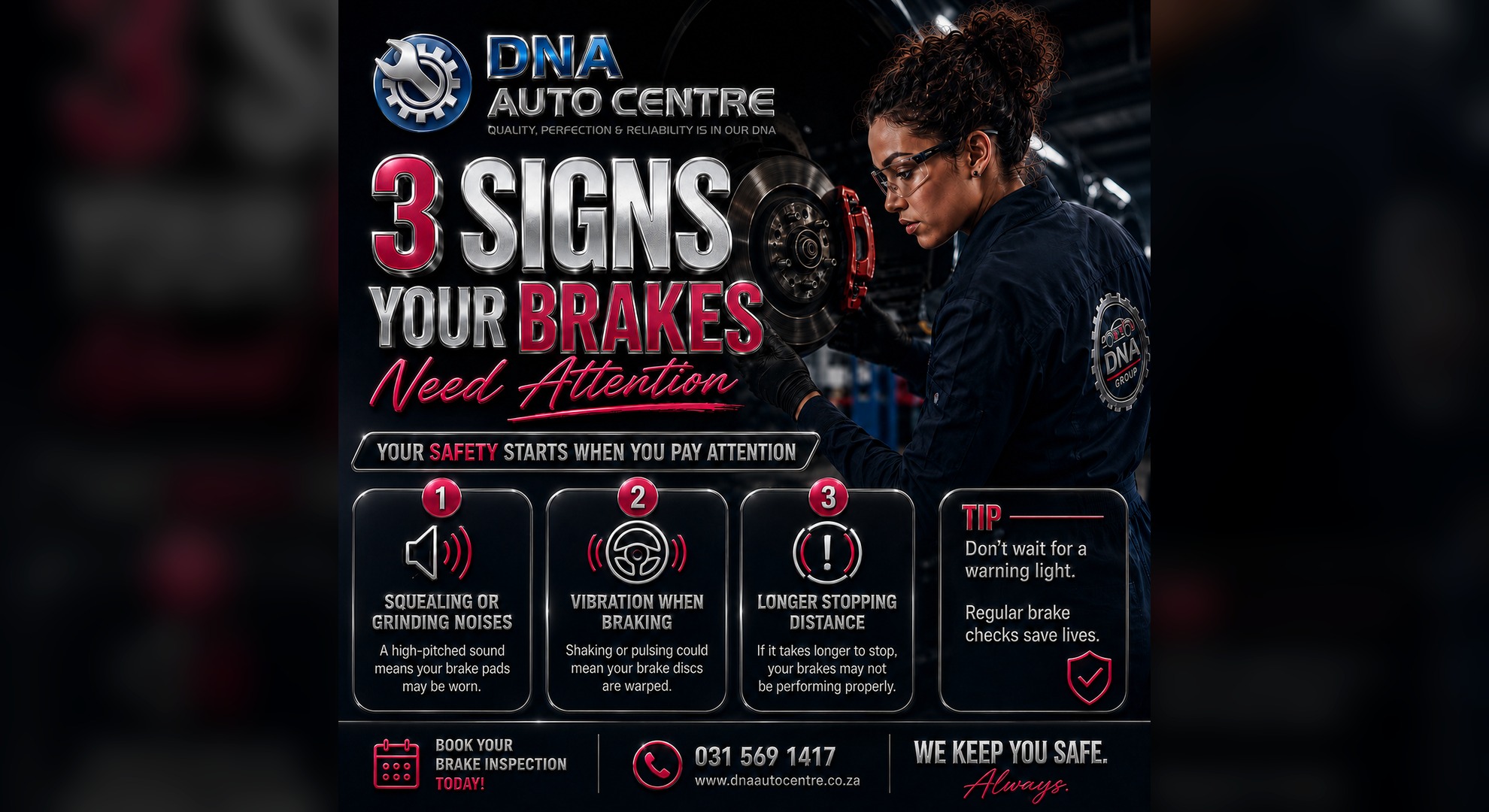
3 signs your brakes need attention
The warning signs below are common, but they should still be treated seriously. They do not always mean the same repair is needed, which is why diagnosis matters before replacing parts.
1. Squealing or grinding noises
A high-pitched squeal often points to worn brake pads or a wear indicator making contact. Grinding is more serious. It can mean the friction material has worn down too far and metal is contacting the brake disc. If you hear grinding, book a brake inspection as soon as possible because continuing to drive can damage discs and increase repair costs.
Brake noise can also come from dirt, uneven wear, poor-quality parts, glazing, or hardware that needs attention. A technician should inspect pad thickness, disc condition and brake hardware before confirming the correct fix.
2. Vibration when braking
If your steering wheel, brake pedal or vehicle body vibrates when you brake, the braking surface may be uneven. Many drivers describe this as shaking, pulsing or juddering. It can happen when brake discs are warped, scored or worn unevenly. It may also be made worse by suspension or wheel issues.
Do not ignore vibration, especially at higher speeds. It affects confidence, stability and stopping performance. If this symptom sounds familiar, read our guide on brake warning signs Durban drivers should not ignore and book a check before the issue becomes more expensive.
3. Longer stopping distances
If your car takes longer to stop than usual, the braking system may not be performing correctly. This can happen gradually, which makes it easy to miss. You may notice that you are pressing the pedal harder, stopping earlier than normal, or feeling less confident in traffic.
Longer stopping distance can be linked to worn pads, contaminated brake fluid, glazed pads, damaged discs, air in the hydraulic system, tyre condition or ABS-related faults. Because several causes are possible, a professional inspection is safer than guessing.
Other brake warning signs to watch for
Brake problems do not always start with obvious noise. Book an inspection if you notice a soft or spongy brake pedal, the vehicle pulling to one side under braking, a burning smell after repeated braking, a brake warning light, fluid leaks near the wheels, or the handbrake feeling weaker than usual.
If an ABS light appears, the vehicle may still brake, but the anti-lock system needs diagnosis. DNA Auto Centre can assist with related ABS diagnostics and repair in Durban so the fault can be traced properly.
What a brake inspection should include
A proper brake inspection should check pad thickness, disc condition, brake fluid level and condition, caliper operation, brake hoses, warning lights and signs of leaks or uneven wear. The technician should also look for related issues that can affect braking, including tyres, suspension and wheel components. This is why brake safety checks Durban motorists book should be more than a quick visual glance.
This is important because replacing pads alone is not always enough. If the discs are damaged, the caliper is sticking or the fluid is compromised, the new parts may not solve the real issue. A complete check helps protect both safety and repair value.
Why Durban driving can wear brakes faster
Local driving conditions matter. Durban drivers often deal with traffic, hills, short trips, coastal moisture and frequent braking around intersections, school routes and shopping areas. Vehicles used for family transport, deliveries, business fleets or towing can place even more demand on brakes. Regular brake safety checks Durban vehicle owners rely on can catch wear before it affects stopping confidence.
If your vehicle carries heavy loads or spends a lot of time in traffic, brake checks should be part of routine vehicle maintenance. You can also combine brake inspection with a car service in Durban so safety items are reviewed before they become urgent.
Can you keep driving with brake symptoms?
If the brake pedal goes soft, the vehicle struggles to stop, grinding is severe, brake fluid is leaking, or a red brake warning light appears, do not continue normal driving. Arrange help and have the vehicle inspected. If the symptom is mild squealing or vibration, book a check promptly and avoid hard braking where possible until it is assessed.
For general road safety guidance, Arrive Alive explains why braking condition and safe stopping distance matter for South African drivers: brakes, braking and road safety. Bosch Car Service also outlines common brake service items including pads, discs and full brake checks: Bosch brake repair guidance.
Book your brake safety check at DNA Auto Centre
Your safety starts when you pay attention. If you hear squealing or grinding, feel vibration when braking, or notice longer stopping distances, book a brake inspection before the problem gets worse.
At DNA Auto Centre, our team can inspect your braking system, explain what is worn, and recommend the right next step. For brake repairs, see our dedicated brake repair near me in Durban service page, or request a quote through our online quote page.
Call DNA Auto Centre: 031 569 1417
WhatsApp: 084 253 3043
Website: www.dnaautocentre.co.za
Brake safety FAQs
What is the most common sign that brake pads are worn?
Squealing, scraping or grinding is one of the most common signs. A brake inspection should confirm pad thickness and check whether the discs have also been affected.
Why does my car vibrate when I brake?
Vibration can point to uneven or warped brake discs, uneven pad wear, wheel issues or suspension wear. The safest step is to inspect the braking and wheel components together.
How often should brakes be checked?
Brakes should be checked during routine servicing and sooner if you notice noise, vibration, warning lights, fluid leaks or longer stopping distances. High-mileage, fleet and heavy-use vehicles may need checks more often.